
Current Procedural Terminology (CPT) Codes
If you work in healthcare, you have probably heard the term “CPT code” many times. But what exactly are these...
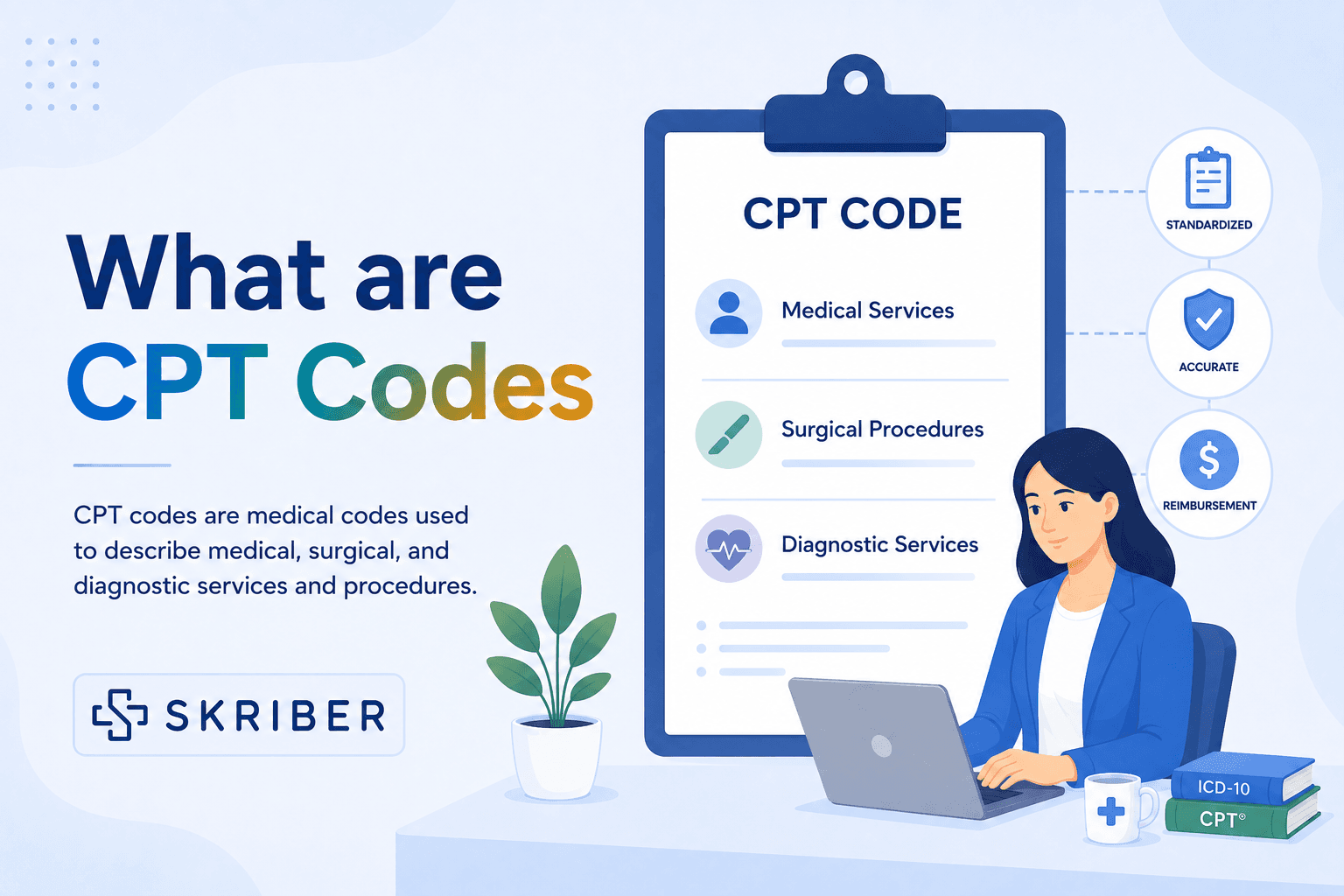
If you work in healthcare, you have probably heard the term “CPT code” many times. But what exactly are these codes? Why do they matter so much? And how do you use them correctly? In this blog we will answer all these questions and more. Whether you are a new medical coder, a doctor, a nurse, or just someone who wants to learn about healthcare billing, this guide is for you. By the end, you will know what CPT codes are, how they are created, why they are important, and how to use them properly. Let us get started.
What Are CPT Codes?
CPT stands for Current Procedural Terminology. CPT codes are a set of medical codes used to describe medical procedures and services. Think of them as a common language that doctors, hospitals, and insurance companies use to talk about what was done during a patient visit. Each CPT code has five digits. Some codes are all numbers, while others have letters too. For example, a code like “99213” might describe a regular office visit with a doctor. A code like “0042T” might describe a new, experimental procedure.
The American Medical Association (AMA) created CPT codes in 1966. The first edition focused mostly on surgical procedures. Over time, the code set has grown to cover thousands of different medical services. Today, there are more than 11,000 CPT codes. CPT codes are used all across the United States. They are the standard way to report medical procedures to insurance companies, Medicare, and Medicaid. Without these codes, it would be very hard to bill for healthcare services or keep track of what treatments patients receive.
A Brief History of CPT Codes
The story of CPT codes begins in 1966. At that time, the American Medical Association saw a need for a standard way to describe medical procedures. Doctors were using different terms for the same procedures. This created confusion when filing insurance claims and keeping medical records. The AMA published the first edition of CPT in 1966. This first edition had about 3,500 codes. Most of these codes described surgical procedures. The codes used four digits at first.
In 1970, the AMA published a second edition. This edition made a big change. It switched from four-digit codes to five-digit codes. The five-digit system is still used today. The second edition also expanded beyond just surgery. It added codes for other types of medical services.
Over the years, CPT has grown and changed. New codes are added every year to keep up with new medical technologies and treatments. The code set now covers everything from simple office visits to complex surgeries to advanced genetic tests. Today, the U.S. government has designated CPT codes as the national standard for reporting medical procedures. This means that almost every healthcare provider in the country uses these codes.
How Are CPT Codes Created?
The CPT Editorial Panel
Creating a new CPT code is not a simple process. It takes careful review and approval by experts. The organization in charge of this is the CPT Editorial Panel.
The CPT Editorial Panel is a group of experts who oversee the CPT code set. The panel has 17 members. These members come from different areas of healthcare. They include physicians from various specialties, representatives from the insurance industry, and members from the American Hospital Association and the Centers for Medicare and Medicaid Services (CMS).
The panel meets three times every year. These meetings are open to the public. Anyone can attend and watch how decisions are made. This makes the process transparent and fair.
Who Can Request a New Code?
Many different people and groups can ask for a new CPT code. This includes doctors, medical specialty societies, hospitals, medical device companies, and other healthcare stakeholders. Medical specialty societies play a very important role. These are groups of doctors who specialize in the same area of medicine. They often identify gaps in the current code set. They gather feedback from their members about what new codes are needed.
The Application Process
To request a new code, you must submit a formal “CPT Code Change Application”. This application asks for detailed information about the procedure or service. You need to describe what the procedure is, how long it takes, and what skills are needed to perform it.
You may also need to include a clinical vignette (a short description of a typical case), peer-reviewed articles that support the safety and effectiveness of the procedure, and estimates of how often the procedure is performed.
Review and Approval
Once an application is submitted, it goes through a careful review process. CPT Advisors, physicians nominated by medical specialty societies, evaluate the request. They provide their expert opinion on whether the new code is needed.
The Editorial Panel then discusses the application at one of its meetings. The panel considers several questions:
- Is there enough research to support this new code?
- How often is this procedure performed?
- Is this procedure truly different from existing procedures?
After discussion, the panel votes on the application. The request can be approved as is, approved with changes, tabled for more review, postponed for more information, or rejected.
How Long Does It Take?
Creating a new CPT code takes time. The whole process, from submitting an application to getting a final decision, can take a year or more. New codes usually take effect on January 1 of each year.
Why Are CPT Codes Important?
They Make Communication Clear
CPT codes give everyone a common language. When a doctor uses a CPT code, everyone knows exactly what procedure was done. There is no confusion about what the words mean. This clear communication helps in many ways. It helps doctors talk to each other about patient care. It helps hospitals keep accurate records. And it helps researchers track what treatments are being used.
They Drive Reimbursement
This is perhaps the most important reason for CPT codes. Insurance companies use CPT codes to decide how much to pay for medical services. Each code has a dollar value attached to it. When a provider submits a claim with the right CPT code, they get paid. When they use the wrong code, the claim may be denied.
CPT codes are the foundation of the entire medical billing system. Without them, providers would not get paid for their work.
They Support Quality Improvement
CPT codes are not just about billing. They also help improve the quality of healthcare. Government agencies use CPT codes to track how often certain procedures are performed. Hospitals use them to evaluate how well their doctors and departments are doing.
Researchers use CPT code data to study healthcare trends. They can see which treatments are becoming more common and which are falling out of use. This information helps guide medical research and policy decisions.
They Enable Innovation
CPT codes also support medical innovation. When a new treatment or technology is developed, it needs a code. Having a code signals to the healthcare industry that the service is legitimate. It helps new treatments get adopted and integrated into standard care.
Category III codes are especially important for innovation. These temporary codes allow new procedures to be tracked and evaluated. If a procedure proves to be effective, it may eventually get a permanent Category I code.
Types of CPT Codes
CPT codes are divided into several categories. Each category serves a different purpose. Understanding these categories is important for using codes correctly.
Category I Codes
Category I codes are the most common type of CPT codes. These codes describe established medical procedures and services. They are backed by strong clinical evidence and are typically covered by insurance.
Category I codes range from 00100 to 99499. They are divided into six main sections based on the type of service:
| Section | Code Range |
|---|---|
| Evaluation and Management | 99201 – 99499 |
| Anesthesia | 00100 – 01999; 99100 – 99140 |
| Surgery | 10021 – 69990 |
| Radiology | 70010 – 79999 |
| Pathology and Laboratory | 80047 – 89398 |
| Medicine | 90281 – 99199; 99500 – 99607 |
Category I codes are what most healthcare providers use every day. They cover everything from routine check-ups to major surgeries.
Category II Codes
Category II codes are different from Category I codes. These codes are used for performance measurement and quality tracking.
Category II codes are alphanumeric. They have four digits followed by the letter “F”. For example, a code might look like “6015F”.
These codes are optional. You do not have to use them. But they can provide valuable information. They help track the quality of care that patients receive. They can show whether patients are getting the right preventive care or follow-up treatments.
Category II codes are not used for billing. They are used for data collection and quality improvement.
Category III Codes
Category III codes are temporary codes. They describe new and emerging technologies, procedures, and services.
These codes are also alphanumeric. They have four digits followed by the letter “T”. For example, a code might look like “0042T”.
Category III codes are created for data collection. They allow new procedures to be tracked and studied. If a procedure proves to be safe, effective, and widely used, it may eventually become a Category I code.
Category III codes stay in the CPT manual for five years. If they are not converted to Category I within that time, they are archived. Providers then have to use an unspecified procedure code instead.
Proprietary Laboratory Analyses (PLA) Codes
PLA codes are a newer addition to the CPT code set. These codes describe proprietary clinical laboratory tests.
PLA codes are used for tests that are developed by a specific laboratory or company. These tests may be cleared or approved by the FDA.
PLA codes are placed in the Pathology and Laboratory section of the CPT manual. They come after the regular laboratory codes.
Administrative MAAA Codes
MAAA stands for Multianalyte Assays with Algorithmic Analyses. These codes describe laboratory procedures that use complex algorithms to analyze multiple test results.
MAAA codes are typically unique to a single laboratory or manufacturer. They are used for tests that produce a numeric score or probability based on multiple factors.
CPT Code Ranges
CPT codes are organized into ranges. Each range covers a specific type of service. Knowing these ranges helps you find the right code quickly.
Here is a detailed breakdown of the main CPT code ranges:
Evaluation and Management (E/M) Codes: 99201 – 99499
E/M codes are used for office visits, hospital visits, and consultations. These are some of the most commonly used codes. In fact, about 85% of all codes submitted in emergency medicine are E/M codes.
E/M codes are based on the complexity of the patient encounter. Factors like the patient’s history, the exam performed, and the medical decision-making all affect which E/M code is used.
Anesthesia Codes: 00100 – 01999; 99100 – 99140
Anesthesia codes describe anesthesia services. These codes are used by anesthesiologists and other providers who administer anesthesia during surgery or procedures.
Surgery Codes: 10021 – 69990
Surgery codes cover a wide range of surgical procedures. These codes are organized by the part of the body being operated on. For example, codes for surgery on the skin are in one range, while codes for surgery on the digestive system are in another.
Radiology Codes: 70010 – 79999
Radiology codes describe diagnostic imaging procedures. This includes X-rays, CT scans, MRIs, and ultrasound exams. These codes cover both the technical aspect of taking the images and the professional aspect of reading and interpreting them.
Pathology and Laboratory Codes: 80047 – 89398
Pathology and laboratory codes describe laboratory tests. This includes blood tests, urine tests, tissue biopsies, and genetic tests. These codes are used by pathologists and laboratory professionals.
Medicine Codes: 90281 – 99199; 99500 – 99607
Medicine codes cover a wide range of services that do not fit into the other categories. This includes things like immunizations, allergy testing, physical therapy, and other therapeutic services.
What Are CPT Modifiers?
Definition of Modifiers
CPT modifiers are two-character codes that are added to a CPT code. They provide extra information about the procedure or service. Modifiers do not change the definition of the code. They just add context.
Modifiers can be numbers, letters, or a combination of both. For example, you might see a modifier like “-50” or “-59” attached to a CPT code.
Why Are Modifiers Used?
Modifiers serve several important purposes. They help explain special circumstances. They clarify what was done during a procedure. And they prevent claim denials.
Here are some common situations where modifiers are used:
| Modifier | What It Means |
|---|---|
| 22 | Increased procedural services |
| 50 | Bilateral procedure (performed on both sides) |
| 52 | Reduced services |
| 59 | Distinct procedural service |
| 62 | Two surgeons |
| 95 | Telehealth services |
Common Modifier Examples
Let’s look at some examples to understand how modifiers work.
Modifier 50 – Bilateral Procedure: If a doctor performs the same procedure on both the left and right sides of the body, modifier 50 is used. For example, if a patient needs a knee injection on both knees, the provider would use the knee injection code with modifier 50.
Modifier 22 – Increased Procedural Services: If a procedure takes more time or effort than usual, modifier 22 can be used. For example, if a surgery is more complex than normal because of scar tissue, the provider might add modifier 22 to get additional reimbursement.
Modifier 59 – Distinct Procedural Service: Modifier 59 is used when two procedures are performed at the same time but are separate and distinct. For example, if a patient has both a mole removed and a skin biopsy done during the same visit, modifier 59 might be used to show these are separate services.
Modifier 95 – Telehealth: Modifier 95 is used for services provided via telehealth. During the COVID-19 pandemic, this modifier became very common as more visits moved online.
How to Use Modifiers Correctly
Using modifiers correctly is important. Mistakes can lead to claim denials or payment delays.
Here are some tips for using modifiers:
- Know your payers: Different insurance companies may have different rules about modifiers.
- Pair correctly: Attach the modifier to the right CPT code.
- Document thoroughly: Your clinical notes must support why you used the modifier.
- Verify accuracy: Double-check that the modifier matches the service provided.
- Stay updated: Modifier rules can change. Keep up with annual updates from the AMA.
CPT vs. ICD Codes: What’s the Difference?
The Basic Difference
CPT codes and ICD codes are both used in healthcare billing. But they tell different parts of the story. CPT codes describe what was done. They tell the procedure or service that was provided. ICD codes describe why it was done. They tell the diagnosis or condition that the patient has. Think of it this way: CPT codes answer the question “What did the doctor do?” ICD codes answer the question “What was wrong with the patient?”
Example
Let’s say a patient comes in with a broken arm. The doctor examines the patient, takes X-rays, and puts the arm in a cast.
- The ICD code would describe the diagnosis: “fracture of the arm”
- The CPT codes would describe what the doctor did: “X-ray of the arm” and “application of a cast”
Both codes are needed for a complete claim. The ICD code shows that the procedure was medically necessary. The CPT codes show what was actually done.
Who Creates Each Code Set?
CPT codes are created and maintained by the American Medical Association (AMA). The AMA is a professional organization for doctors.
ICD codes are created by the World Health Organization (WHO). ICD stands for International Classification of Diseases. The WHO is a global health organization.
How Often Are They Updated?
CPT codes are updated every year. New codes are added, old codes are revised, and some codes are removed. Changes take effect on January 1 of each year.
ICD codes are updated less often. The current version, ICD-10, has been in use since 2015 in the U.S. A new version, ICD-11, was released in 2022. But it takes time for healthcare systems to transition to a new version.
What About HCPCS Codes?
HCPCS stands for Healthcare Common Procedure Coding System. It is another coding system used in healthcare billing.
HCPCS has two levels:
- Level I: This is the same as CPT codes
- Level II: These codes are used for items not covered by CPT, like ambulance services, medical supplies, and durable medical equipment
So when people talk about “HCPCS codes,” they are usually referring to Level II codes. These codes are used to bill for things like wheelchairs, oxygen, and other medical equipment.
How to Use CPT Codes Correctly
Start with the Documentation
The first step in using CPT codes is to look at the medical documentation. The doctor’s notes should describe exactly what was done during the patient visit.
Read the documentation carefully. Look for key details like:
- What procedures were performed?
- How long did they take?
- What was the complexity?
- Were there any complications?
The documentation is your guide to choosing the right code.
Use the CPT Codebook
The official CPT codebook is published every year by the AMA. This book contains all the CPT codes, along with guidelines for how to use them. The codebook is organized by section. You can look up codes by the type of service or by the body part involved. There is also an index at the back of the book to help you find codes by keyword.
Always use the most current edition of the codebook. Codes change every year. Using an old codebook could lead to billing errors.
Check the Code Descriptor
Before you select a code, read the full descriptor. The descriptor is the detailed description of what the code covers. Make sure the descriptor matches exactly what was done. If there is any doubt, look for more information or consult with a coding expert.
Follow the Guidelines
Each section of the CPT codebook has its own guidelines. These guidelines explain important rules for using codes in that section.
For example, the Evaluation and Management section has guidelines about what counts as a “new” patient versus an “established” patient. The surgery section has guidelines about what procedures can be billed together.
Read these guidelines carefully. They can make the difference between a claim that gets paid and one that gets denied.
Use Modifiers When Needed
As we discussed earlier, modifiers add important information to a CPT code. Use them when the situation calls for it. For example, if a procedure was more complex than usual, add modifier 22. If a procedure was performed on both sides of the body, add modifier 50. But do not use modifiers unless they are truly needed. Using unnecessary modifiers can cause just as many problems as using none at all.
Stay Up to Date
CPT codes change every year. New codes are added. Old codes are revised. Some codes are deleted. To code correctly, you need to stay informed about these changes. Subscribe to coding newsletters. Attend coding seminars. Join professional coding organizations.
The AMA also provides resources to help coders stay current. Their website has information about new codes and changes to existing codes.
Common Mistakes to Avoid
Using the Wrong Code: This is the most common coding mistake. Using the wrong code can lead to claim denials or even accusations of fraud. To avoid this mistake, always read the full code descriptor. Do not just guess based on the code title. Make sure the code matches the documentation.
Not Using Modifiers: Sometimes coders forget to use modifiers when they are needed. This can lead to claims being denied or underpaid. For example, if a procedure is performed on both sides of the body, you need to use modifier 50. If you do not, the insurance company may only pay for one side.
Overusing Modifiers: Using too many modifiers can be just as bad as using too few. Insurance companies may view this as a red flag. It can lead to audits or claim reviews. Only use modifiers when they are truly needed. Do not add them just to try to get more money.
Not Documenting Properly: The documentation must support the codes you use. If you code for a complex procedure but the documentation only describes a simple one, your claim may be denied. Make sure the doctor’s notes include all the details needed to support the codes. This includes the patient’s history, the exam findings, the procedures performed, and the medical decision-making.
Using Old Codes: CPT codes change every year. A code that was valid last year might be deleted or changed this year. Using an old code is a sure way to get a claim denied. Always use the most current edition of the CPT codebook. Check for updates regularly throughout the year.
5 Tips for Success with CPT Coding
- Get Proper Training: CPT coding is a specialized skill. It requires training and practice. Consider taking a coding course or getting a certification. There are several professional coding certifications available. These include the Certified Professional Coder (CPC) credential from the AAPC and the Certified Coding Specialist (CCS) credential from AHIMA.
- Use Technology: There are many software tools that can help with CPT coding. These tools can suggest codes based on the documentation. They can also check for errors and missing modifiers. Electronic health record (EHR) systems often have built-in coding tools. There are also standalone coding software programs and mobile apps.
- Join Professional Organizations: Professional organizations like the AAPC and AHIMA offer resources for coders. They provide training, networking opportunities, and updates on coding changes. These organizations also offer certification programs. Having a certification can improve your job prospects and increase your earning potential.
- Communicate with Providers: Coders and providers need to work together. If you are unsure about what procedure was performed, ask the provider for clarification. Good communication can prevent coding errors. It can also help providers understand what information is needed in their documentation.
- Review and Audit: Regularly review your coding work. Check for patterns of errors. If you notice that you keep making the same mistake, take steps to correct it. Many healthcare organizations do regular coding audits. These audits help identify problems and improve accuracy.
The Future of CPT Codes
Keeping Up with Technology
Medicine is always changing. New treatments and technologies are developed all the time. CPT codes must keep up with these changes. The AMA is committed to updating the CPT code set regularly. The process is designed to be flexible and responsive to innovation.
Digital Health and Telemedicine
Digital health is a growing field. More and more healthcare is being delivered online. CPT codes have already started to reflect this change. For example, there are now codes for telehealth visits and remote patient monitoring. As digital health continues to grow, more codes will be added.
Artificial Intelligence
AI is starting to play a role in healthcare. AI can help with diagnosis, treatment planning, and even surgery. The CPT code set already includes some codes for AI-enabled services. As AI becomes more common in healthcare, we can expect to see more CPT codes for AI-related services.
Value-Based Care
Healthcare is moving away from fee-for-service and toward value-based care. In value-based care, providers are paid based on the quality of care they deliver, not just the quantity.
CPT codes are adapting to support this shift. Category II codes, which track quality measures, are one example. As value-based care becomes more common, these codes may become more important.
Summary
CPT codes are an essential part of the healthcare system. They provide a common language for describing medical procedures. They enable accurate billing and reimbursement. And they support quality improvement and research.
Here are the key points to remember:
- CPT stands for Current Procedural Terminology
- CPT codes are five-digit codes that describe medical procedures and services
- The AMA creates and maintains CPT codes through the CPT Editorial Panel
- There are three main categories of CPT codes: Category I, Category II, and Category III
- Category I codes are the most common and cover established procedures
- Category II codes track quality measures
- Category III codes are temporary codes for new procedures
- CPT modifiers provide extra information about a procedure
- ICD codes describe diagnoses, while CPT codes describe procedures
- Both CPT and ICD codes are needed for complete medical claims
- Using the correct CPT code is essential for getting paid
- CPT codes are updated every year, so it is important to stay current
Whether you are a doctor, a coder, or a healthcare administrator, understanding CPT codes are a must. They are the language of healthcare billing. Learn this language properly, and you will be well-equipped to navigate the complex world of medical reimbursement.