
Medication Administration Record (MAR)
Let’s start with the basics. A Medication Administration Record, or MAR for short, is one of the most important documents...
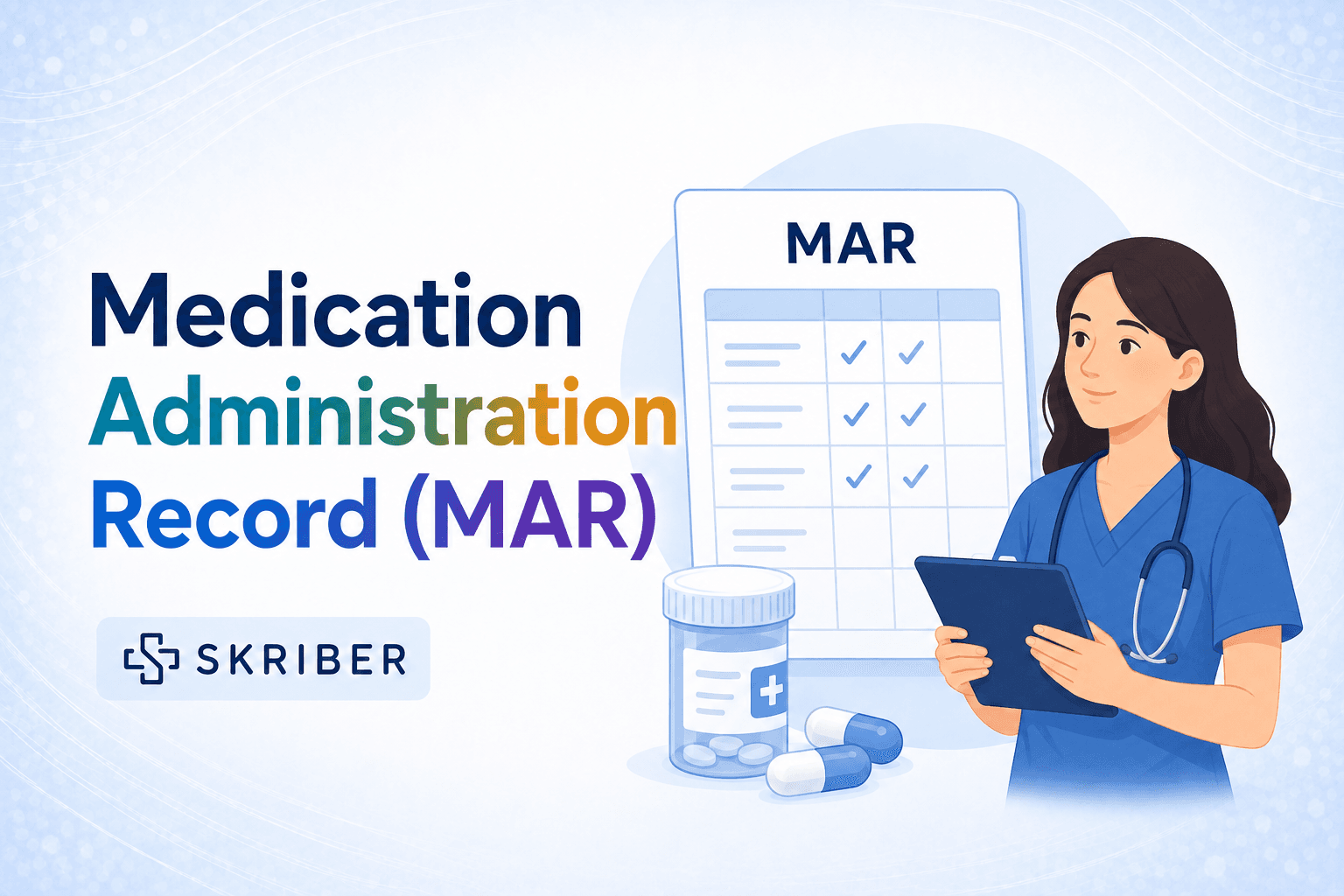
Let’s start with the basics. A Medication Administration Record, or MAR for short, is one of the most important documents in healthcare. Simply put, it is a record that shows all the medications a patient needs to take and tracks whether those medications have actually been given. Think of the MAR as a to-do list for medications. It tells nurses and other healthcare workers exactly what medicine to give, how much to give, when to give it, and how to give it. After the medication is given, the MAR becomes a permanent record of what happened. It shows who gave the medicine, when they gave it, and what dose was given.
The MAR is part of the patient’s permanent medical record. This means it stays with the patient’s chart forever. Nothing on the MAR can be erased or removed. If a medication is stopped, it is marked or “yellowed out” but never deleted. This is important because it creates a complete and honest record of the patient’s medication history.
Every patient has their own MAR. There is a specific MAR for each patient and for each day. This might sound like a lot of paperwork, but it is necessary to keep track of all the different medications that different patients need.
Why Is the MAR So Important?
The MAR is not just another piece of paperwork. It plays an important role in keeping patients safe. Here is why it matters so much.
Patient Safety Comes First
The most important job of the MAR is to prevent medication errors. Medication errors can cause serious harm to patients. Giving the wrong drug, the wrong dose, or giving a drug at the wrong time can lead to allergic reactions, drug overdoses, organ damage, or even death. The MAR helps prevent these errors by providing clear, accurate information about what each patient needs. When nurses follow the MAR carefully, they are much less likely to make mistakes.
It Is a Legal Document
The MAR is a legal document. This means it can be used in court if there is a question about what medications a patient received. Because the MAR is a legal record, it must be filled out accurately and completely. Every entry must be honest and truthful.
Healthcare facilities can get in serious trouble if their MARs are not accurate. Regulatory agencies like the Care Quality Commission (CQC) in the UK require that medication records meet certain standards. Facilities that do not meet these standards can face fines or even lose their license to operate.
It Helps with Communication
The MAR is also a communication tool. Different healthcare workers take care of the same patient throughout the day and over many days. The MAR lets everyone know what medications have been given and what still needs to be given.
For example, if a nurse gives a patient their morning medications, they document this on the MAR. The afternoon nurse can look at the MAR and see that the morning medications were given. This prevents the patient from getting the same medication twice.
The MAR also helps communicate with the pharmacy. If there is a problem with a medication order, the nurse can use the MAR to send a message to the pharmacy.
It Ensures Continuity of Care
Patients often move between different care settings. They might go from a hospital to a nursing home, or from a nursing home to their own home with home care services. The MAR travels with the patient. This means that the new healthcare team can look at the MAR and see exactly what medications the patient has been getting. This prevents gaps in care and ensures that the patient keeps getting the right medications.
What Information Does a MAR Contain?
A MAR contains a lot of important information. Let us break it down into the main sections.
Patient Information
Every MAR starts with basic information about the patient. This includes:
- The patient’s full name
- The patient’s date of birth
- The patient’s medical record number
- The name of the patient’s doctor
- Any allergies the patient has
This information is important for making sure the right medications go to the right patient. It also helps healthcare workers know if there is anything they need to be careful about, like allergies.
Medication Details
The main part of the MAR lists all the medications the patient is supposed to receive. For each medication, the MAR includes:
- The name of the medication (both brand name and generic name)
- The strength or dose of the medication
- The form of the medication (tablets, capsules, liquid, patches, etc.)
- How the medication should be given (the route of administration)
- How often the medication should be given (the frequency)
- What time the medication should be given
- Any special instructions (like “take with food” or “take on an empty stomach”)
This information comes from the doctor’s orders. The doctor writes the prescription, and then the pharmacy or nurse puts this information onto the MAR.
Administration Schedule
The MAR shows a schedule for when each medication should be given. This is usually broken down by time of day. For example, medications might be scheduled for 8:00 AM, 12:00 PM, 4:00 PM, and 8:00 PM.
The schedule helps nurses know exactly when to give each medication. It also helps make sure that medications are given at the right intervals. Some medications need to be given every 4 hours, while others are given once a day.
Documentation Section
The MAR also has a section where nurses document that they have given the medication. For each dose, the nurse writes:
- The date and time the medication was given
- The dose that was given
- Their initials or signature
This documentation creates a record of exactly what happened. If a medication was not given, the nurse documents why. Common reasons include the patient refusing the medication or the patient being away from the facility.
Stop and Review Dates
The MAR also shows when each medication should be reviewed or stopped. Some medications are only meant to be taken for a short time. Others need to be reviewed regularly to make sure they are still working and still needed.
The Five Rights of Medication Administration
When healthcare workers use the MAR, they follow something called the “Five Rights.” These are five checks that must be made before every single medication is given.
Right Patient
The first right is making sure the medication is given to the right patient. This might sound obvious, but it is easy to make mistakes, especially in busy healthcare settings. Nurses check the patient’s name and date of birth against the MAR before giving any medication.
Right Medication
The second right is making sure the right medication is given. The nurse checks the medication label against the MAR to make sure they match. This prevents giving a patient a medication that looks similar to what they are supposed to get.
Right Dose
The third right is making sure the right dose is given. The nurse checks the dose on the medication label against the dose on the MAR. Giving too much medication can be dangerous. Giving too little might not work.
Right Route
The fourth right is making sure the medication is given by the right route. Some medications are taken by mouth. Others are given as injections, through an IV, or as patches on the skin. Giving a medication by the wrong route can be very dangerous.
Right Time
The fifth right is making sure the medication is given at the right time. Some medications need to be given at very specific times to work properly. Others need to be spaced out evenly throughout the day.
Healthcare workers are taught to check these five rights three times during the medication administration process. This reduces the chances of making a mistake.
How the MAR Process Works
Let us walk through the entire process of how a medication goes from a doctor’s order to being documented on the MAR.
Step 1: The Doctor Writes the Order
The process starts when a doctor writes an order for a medication. This might happen during a visit to the hospital or clinic. The doctor might write the order on a paper form or enter it directly into a computer system.
Step 2: The Order Is Transcribed
Next, someone transcribes the order onto the MAR. In the past, this was done by hand on paper forms. Today, it is often done using computers. The person doing the transcribing must be very careful to copy the order exactly as the doctor wrote it.
Step 3: The Pharmacy Verifies the Order
The pharmacist checks the order to make sure it is correct. They check for things like drug interactions, correct dosing, and whether the medication is appropriate for the patient. If there is a problem, the pharmacist contacts the doctor to clarify the order.
Step 4: The Nurse Checks the MAR
Before giving any medication, the nurse checks the MAR against the original order. This is another safety check to catch any errors that might have happened during transcription.
Step 5: The Nurse Administers the Medication
The nurse gives the medication to the patient according to the instructions on the MAR. They follow the Five Rights we discussed earlier.
Step 6: The Nurse Documents
After giving the medication, the nurse documents it on the MAR. They write the time, the dose given, and their initials. This creates a permanent record that the medication was given.
Paper MAR vs. Electronic MAR (eMAR)
For many years, MARs were paper documents. Nurses would write everything by hand. Today, more and more healthcare facilities are switching to electronic MARs, or eMARs. Let us look at the differences.
What Is a Paper MAR?
A paper MAR is exactly what it sounds like. It is a paper form that lists all of a patient’s medications. Nurses write on the paper form to document that they have given medications.
Paper MARs have been used for a very long time. Many healthcare workers are familiar with them. However, paper MARs have some problems:
- Handwriting can be hard to read
- Records can get lost or damaged
- It takes a lot of time to fill them out
- It is hard to track changes in medications
- Auditing paper records is time-consuming
What Is an eMAR?
An eMAR is a digital version of the medication administration record. Instead of writing on paper, nurses use computers, tablets, or smartphones to document medications.
eMAR systems are becoming more common in healthcare. They offer many advantages over paper systems.
Benefits of eMAR
- Fewer Errors: eMAR systems help reduce medication errors. They can automatically check for drug interactions and allergies. They can also alert nurses if a medication is due or overdue.
- Better Legibility: With eMAR, there is no problem with hard-to-read handwriting. Everything is typed and easy to read.
- Real-Time Updates: When a medication is given, it is documented immediately in the eMAR. Other healthcare workers can see this information right away.
- Complete Audit Trail: eMAR systems create a complete record of who did what and when. Every action is time-stamped and linked to the person who did it.
- Time Savings: eMAR systems can save healthcare workers a lot of time. One care home reported saving up to an hour on each medication round after switching to eMAR. This saved time can be spent on direct patient care.
- Barcode Scanning: Many eMAR systems use barcode scanning. The nurse scans the barcode on the medication and the barcode on the patient’s wristband. The system checks that they match. This is a powerful way to prevent errors.
- Better Communication: eMAR systems make it easy to share information with the pharmacy and other healthcare providers.
The Move from Paper to eMAR
Switching from paper to eMAR is a big change. It requires training and cooperation from everyone on the healthcare team. However, the benefits are clear. eMAR systems are safer, more efficient, and more accurate than paper systems.
Common MAR Errors and How to Prevent Them
Even with the best intentions, errors can happen with MARs. Let us look at some common errors and how to prevent them.
Transcription Errors
Transcription errors happen when information is copied incorrectly from the doctor’s order to the MAR. This was a bigger problem with paper MARs, but it can still happen with eMARs.
To prevent transcription errors, healthcare facilities have multiple checks in place. The pharmacist checks the order. The nurse checks the MAR against the original order. These checks catch most errors.
Omission Errors
Omission errors happen when a medication is not given and not documented. Maybe the nurse forgot to give the medication. Maybe they gave it but forgot to document it.
To prevent omission errors, many facilities use electronic systems that alert nurses when medications are due. Regular audits also help catch patterns of omission errors.
Documentation Errors
Documentation errors happen when information is recorded incorrectly on the MAR. This might be writing the wrong time, the wrong dose, or using abbreviations that are not allowed.
To prevent documentation errors, healthcare workers are trained on how to fill out MARs correctly. They are taught to use standard terminology and to be very careful when documenting.
False Documentation
False documentation is a serious problem. This happens when a nurse documents that they gave a medication when they actually did not. This is both dangerous and unethical.
To prevent false documentation, healthcare facilities have policies that require documentation to happen at the time of administration. Some facilities also use electronic systems that track when documentation happens.
Tips for Avoiding MAR Errors
Here are some practical tips for avoiding MAR errors:
- Always check the Five Rights before giving any medication.
- Document at the time of administration, not later.
- Minimize distractions during medication administration.
- Use standard abbreviations and avoid confusing ones.
- Double-check high-risk medications like insulin and blood thinners.
- Communicate clearly with other members of the healthcare team.
Special Considerations for Different Settings
The MAR looks a little different depending on where it is being used. Let us look at some different healthcare settings.
Hospitals
In hospitals, MARs are usually electronic. They are integrated with the hospital’s electronic health record system. Nurses use computers or handheld devices to access the MAR and document medications.
Hospital MARs often include additional information like IV infusion rates and lab monitoring instructions. They also often include barcode scanning for added safety.
Nursing Homes and Long-Term Care
In nursing homes, MARs are often paper-based, although many are switching to eMAR. Residents in nursing homes often take many medications, so the MAR can be quite long. Nursing home MARs often include information about “PRN” or “as needed” medications. These are medications that are only given when the patient needs them, like pain medication.
Home Care
In home care, MARs help caregivers keep track of medications for clients in their own homes. Home care MARs are often simpler than hospital MARs. They focus on making sure medications are taken at the right time.
Many home care agencies are switching to eMAR systems that can be accessed on smartphones or tablets.
Community and Primary Care
In community settings, MARs are sometimes called Medicines Authorisation Records (MARs) or Medicines Authorisation and Administration Records (MAARs). These records help community nursing teams safely administer medications to patients in their homes.
Legal and Regulatory Requirements
Because the MAR is a legal document, there are strict requirements for how it must be maintained.
What the Law Requires
Different countries and regions have different laws about MARs. However, there are some common requirements:
- The patient’s name and date of birth must be on the MAR
- Each medication must be clearly identified by name and strength
- The dose, route, and frequency must be shown
- Each administration must be documented with the date, time, and initials of the person giving it
- The MAR must be kept as part of the permanent medical record
Controlled Substances
There are special rules for controlled substances (drugs that have a high potential for abuse, like opioids). For controlled drugs, the quantity must be written in both words and figures. Two signatures may be required when these medications are administered.
Audits and Inspections
Healthcare facilities are regularly audited to make sure their MARs meet legal requirements. Auditors check that MARs are complete, accurate, and up to date. Facilities that do not meet the standards can face serious consequences.
Training for MAR Use
Healthcare workers need proper training to use MARs correctly.
What Training Includes
Training on MAR use typically covers:
- What MARs are and why they are important
- How to read and interpret medication orders on the MAR
- How to document medications correctly on the MAR
- How to make changes to the MAR when medications are added or stopped
- How to handle special situations like PRN medications or refused medications
Ongoing Education
MAR training is not a one-time thing. Healthcare workers need ongoing education to stay up to date with best practices and new technologies. Many facilities require annual training on medication administration and MAR documentation.
The Future of MARs
MARs have come a long way from simple paper forms. What does the future hold?
More eMAR Adoption: More and more healthcare facilities are switching to eMAR systems. This trend is likely to continue as the benefits of eMAR become more widely recognized.
Integration with Other Systems: eMAR systems are becoming more integrated with other healthcare systems. They connect with electronic health records, pharmacy systems, and laboratory systems. This integration makes healthcare more efficient and safer.
Artificial Intelligence: In the future, artificial intelligence might be used to analyze MAR data. AI could help identify patterns in medication errors and suggest improvements. It could also help predict which patients are at risk for medication problems.
Patient Access: Some healthcare systems are starting to give patients access to their own MARs. This helps patients stay informed about their medications and encourages them to be active participants in their care.
The Bottom Line
The Medication Administration Record is a simple but powerful tool. It helps healthcare workers give the right medications to the right patients at the right time. It creates a permanent record of what happened. It helps prevent errors and keeps patients safe. Whether it is a paper form or an electronic system, the MAR is essential to safe healthcare. Every healthcare worker who uses a MAR should understand how important it is. They should take pride in filling it out accurately and completely. The move from paper to electronic MARs is making healthcare safer and more efficient. But no matter what form the MAR takes, the goal remains the same: to make sure patients get the medications they need, when they need them, in the safest way possible.